

OEM vs ODM Sanitary Ware Rubber Parts: B2B Sourcing Guide
In the global plumbing and sanitary ware industry, the components that remain out of sight are often the ones that dictate a brand's reputation. For commercial toilet manufacturers, plumbing wholesalers, and OEM importers across the United States and Europe, a single component failure can lead to costly product recalls, insurance claims, and damaged retail relationships.
Among these critical components, sanitary ware rubber parts—such as a fill valve seal, flush valve seal, or tank-to-bowl gasket—serve as the primary defense against leaks. When sourcing these specialized rubber components from global manufacturers, B2B procurement managers face a fundamental strategic decision: Should you choose OEM (Original Equipment Manufacturing) or ODM (Original Design Manufacturing)?
This comprehensive guide breaks down the technical and operational differences between OEM and ODM sourcing models, helping your engineering and procurement teams choose the right path to optimize supply chains, ensure compliance, and maximize profitability.
Understanding the Core Differences: OEM vs. ODM
For global sanitary brands in markets like the USA, Germany, the UK, and France, the choice between OEM and ODM depends entirely on your internal engineering resources and product differentiation goals.
+------------------------------------+------------------------------------+
| OEM (Original Equipment Mfg.) | ODM (Original Design Mfg.) |
+------------------------------------+------------------------------------+
| • Client provides complete blue- | • Factory provides pre-engineered, |
| prints, CAD models & tolerances. | market-ready rubber part designs.|
| • Factory executes precise custom | • Client selects from an existing |
| molding and compounding. | catalog and adds branding/tweaks.|
| • Maximum control over IP and | • Faster time-to-market; lower |
| proprietary geometric designs. | upfront tooling investments. |
+------------------------------------+------------------------------------+
The OEM Model: Built to Your Exact Blueprints
In an OEM partnership, you own the intellectual property (IP), the precise CAD dimensions, and the material formulation requirements. The rubber manufacturer acts as your dedicated production arm, utilizing advanced injection or compression molding tooling built exactly to your specifications. This model is ideal for established sanitary brands launching a proprietary dual-flush mechanism or a patented commercial flushometer system requiring custom-engineered sealing profiles.
The ODM Model: Private-Label Fluid Control
In contrast, ODM leverages the manufacturer's existing research, development, and tooling catalog. If a plumbing distributor in Western Europe needs standard-sized toilet tank flappers, universal spud washers, or common aftermarket fill valve seal replacements, an ODM arrangement allows them to white-label pre-engineered, field-tested parts without paying for expensive new mold design and tooling development.
Material Engineering: The Foundation of Sanitary Performance
Whether you choose OEM or ODM, the rubber compound formulation must withstand harsh local water conditions across North America and Europe. Standard commercial rubber degrades rapidly when exposed to chloramines, chlorine, and hard mineral deposits commonly found in municipal water systems.
A world-class B2B rubber parts manufacturer provides specialized elastomer compounding tailored to your target market:
* EPDM (Ethylene Propylene Diene Monomer): The industry standard for plumbing applications. Specialized peroxide-cured EPDM compounds offer exceptional resistance to chloramines and ozone, ensuring a **flush valve seal** maintains its sealing elasticity for over a decade.
* Silicone Rubber (VMQ): Ideal for extreme high-temperature or low-temperature plumbing environments. Silicone exhibits low compression set and excellent chemical stability, making it popular for premium residential fill valve diaphragms.
* Fluoroelastomer (FKM): Reserved for heavy-duty commercial or industrial fluid control systems where maximum resistance to chemical cleaning agents and acids is mandatory.
Technical Applications in Modern Sanitary Ware
Sanitary rubber components are engineered for highly specific dynamic and static sealing applications within fluid control systems.
1. Toilet Fill Valves and Diaphragms
The fill valve seal operates under constant hydraulic pressure cycles. It requires precise durometer (hardness) control and a flawless surface finish to ensure instantaneous, quiet shut-off without water hammering.
2. Flush Valves and Flappers
A flush valve seal must resist warping and chemical swelling. If the rubber swells or loses its shape by even a fraction of a millimeter, microscopic gaps form, leading to silent leaks that waste thousands of gallons of water and violate local efficiency standards like US EPA WaterSense or European CE plumbing mandates.
3. Tank-to-Bowl Gaskets and Couplings
These heavy-duty, static seals require excellent ozone resistance and compression recovery to absorb the structural stress between ceramic fixtures without cracking or leaking over long-term installation.
Strict Quality Control and Global Regulatory Compliance
Sourcing rubber components for Western markets requires strict adherence to international material safety and plumbing standards. A reputable global manufacturing partner maintains robust quality assurance systems to protect your supply chain.
Critical Global Standards for Sanitary Rubber:
* USA Market: NSF/ANSI 61 (Drinking Water System Components), FDA compliance for non-toxic materials, and IAPMO/UPC approvals.
* European Market: KTW (Germany), WRAS (United Kingdom), ACS (France), and EN 681-1 standards for elastomeric seals in water supply applications.
An experienced OEM/ODM factory guarantees traceabilities through ISO 9001:2015 certified manufacturing processes. Every production batch undergoes rigorous laboratory testing, including:
* Compression Set Testing: To ensure the rubber recovers its original shape after prolonged compression.
* Ozone and Aging Resistance:Simulating years of exposure to atmospheric elements and water treatment chemicals.
* Dimensional Inspection:Utilizing automated optical sorting machinery to verify tolerances down to the micron level for high-precision OEM orders.
Streamlining Your Supply Chain: Tooling and Production Capabilities
When evaluating a manufacturing partner for bulk contract supply, look for comprehensive, in-house capabilities that reduce lead times and total cost of ownership (TCO).
* In-House Mold Making: Reduces OEM prototyping timelines from months to weeks. Precision CNC and EDM toolmaking ensure long-lasting molds capable of millions of shots.
* Scalable Production Lines: Automated rubber injection molding presses provide high-efficiency, flash-free manufacturing for massive wholesale volumes, keeping piece prices competitive.
* Custom Packaging and Logistics: For ODM distributors, parts can be supplied in retail-ready blister packs, bulk kits with barcodes, or specialized industrial packaging for direct-to-assembly-line integration in US or European factories.
Conclusion: Partner with a Proven Rubber Sourcing Expert
Choosing between OEM and ODM boils down to a balance of design ownership and development speed. If you possess unique design innovations, OEM custom molding secures your market advantage. If you need rapidly scalable, cost-effective, code-compliant replacement parts, an ODM catalog provides an accelerated path to market.
As a leading global manufacturer specializing in sanitary ware rubber parts, we combine advanced material science, rigorous ISO-certified quality control, and decades of export experience serving the USA and European plumbing markets. Whether you require a custom-engineered flush valve seal built to strict tolerances or bulk supply of standard plumbing gaskets, our engineering team is ready to optimize your product performance.
Optimize your plumbing component supply chain today. Contact our engineering desk to request a technical consultation, material data sheets, or a competitive factory quote.
FAQ
Q1: What is the typical MOQ (Minimum Order Quantity) for OEM custom sanitary rubber parts?
For custom OEM projects requiring new tooling, MOQs typically range from 5,000 to 20,000 pieces per run, depending on part size, geometric complexity, and the specific rubber compound required. ODM catalog parts often feature lower minimums.
Q2: How do you ensure your rubber parts resist chloramines in US and UK water networks?
We utilize specialized, high-grade peroxide-cured EPDM compounds specifically formulated to pass the rigorous chemical immersion testing required by NSF/ANSI 61 and WRAS. These compounds prevent the premature blistering, degradation, and gummy softening typical of lower-quality sulfur-cured rubbers.
Q3: Can you duplicate or reverse-engineer an existing flush valve seal design?
Yes. Under our ODM/OEM services, if you send us a physical sample or a legacy technical drawing, our in-house engineering team can perform a complete material analysis and dimensional scan to reproduce or optimize the component for mass production.
Q4: What are your typical lead times for new OEM tooling and initial samples?
Generally, tool design and prototype mold fabrication take 2 to 3 weeks. Once the sample mold is ready, initial test samples are shipped to your engineering department via express courier for immediate dimension and compounding verification.
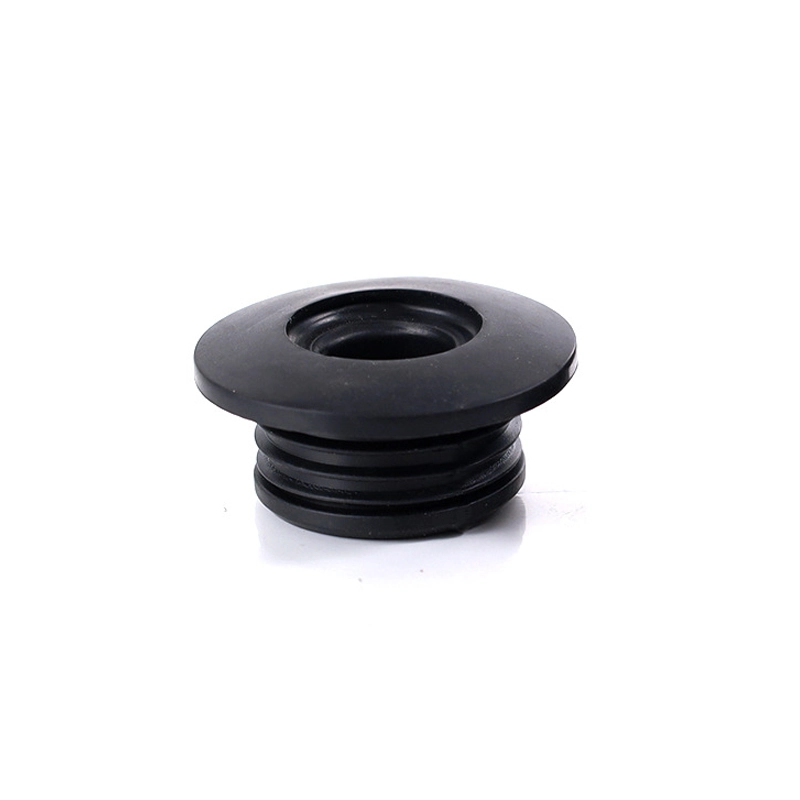 Urinal Sensor Inlet Seal Gasket Factory Replacement
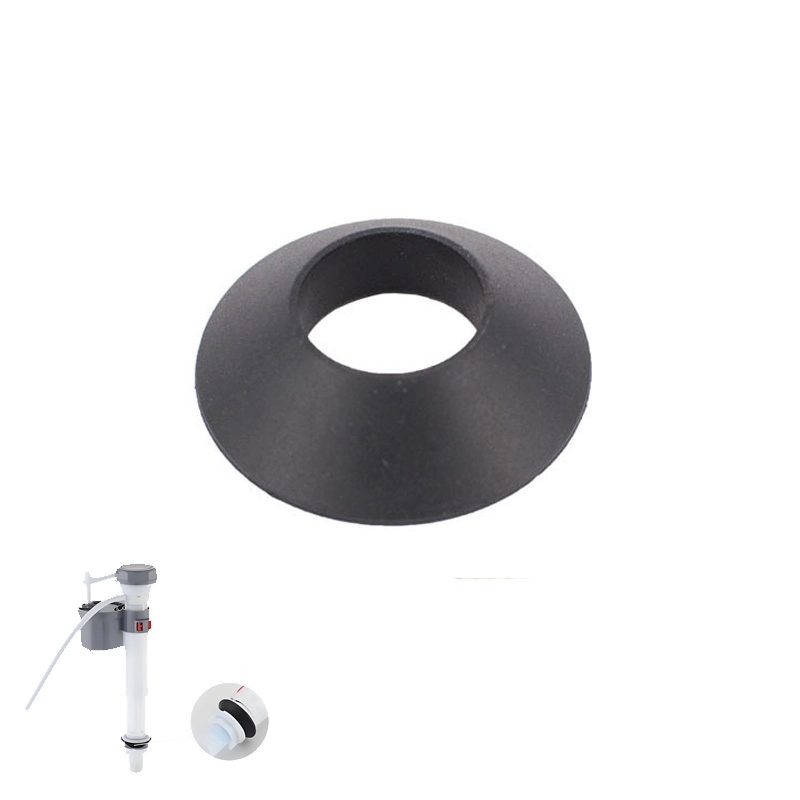 Toilet Tank Fill Valve Conical Seal Factory Replacement
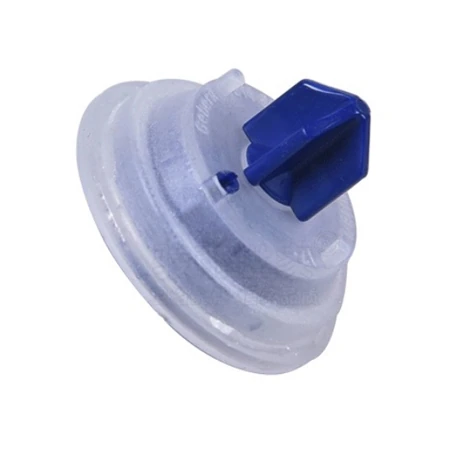 Wholesale Toilet Cistern Inlet Valve Diaphragm Washers
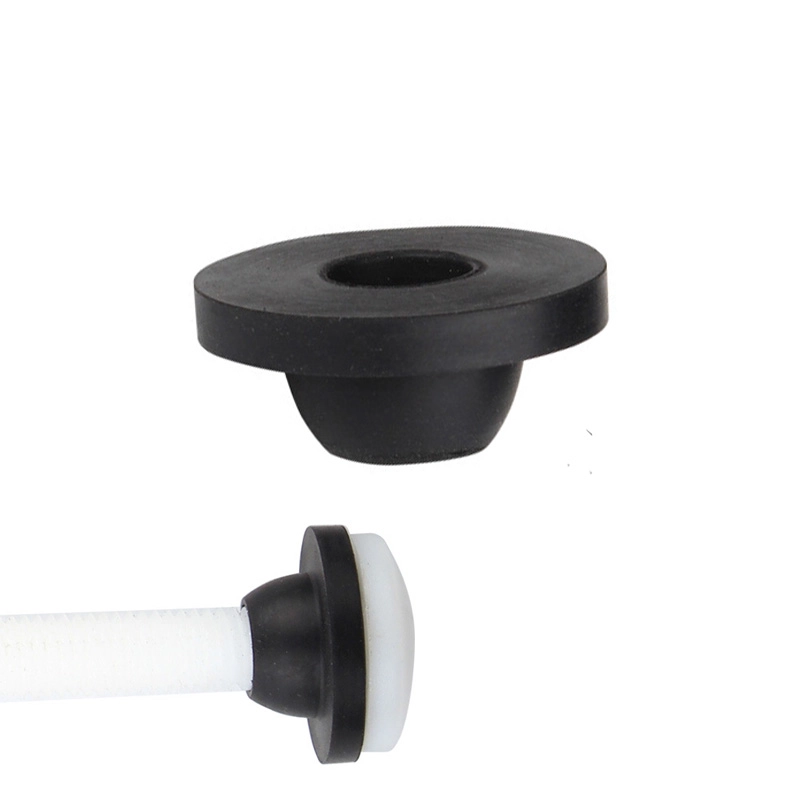 Conical Rubber Washers for Toilet Bolts Factory Wholesale