
Welcome to ZXSEAL Manufacturer of Toilet Tank Seal Solutions
News

How do I measure the dimensions of the toilet tank flush valve seal?

Views:1
Update time:2025-12-15

Measuring the dimensions of a toilet tank flush valve seal is a core step to ensure compatibility. It requires accurate measurement of 3 key dimensions (inner diameter, outer diameter, thickness) and supplementary confirmation of structural characteristics. The tools are simple (a vernier caliper is preferred; a ruler/phone can be used as a substitute without specialized tools). Specific steps are as follows:

I. Preparation Before Measurement: Tools & Pre-Operations

1. Essential Tools (Ranked by Precision Priority)

First Choice: Vernier Caliper (Precision 0.02mm) – Suitable for accurate measurement, especially for brand-specific seals

Second Choice: Steel Ruler/Tape Measure (Precision 1mm) – Suitable for universal seals; take the average of multiple measurements

Emergency: Smartphone (with screen size marked) – Estimate dimensions by comparing with the known width of the phone screen (for temporary use only)

2. Pre-Operations: Remove the Old Seal (Critical Prerequisite)

  1. Shut Off Water & Drain Tank: Close the "angle stop valve" under the toilet (turn counterclockwise to fully close), then press the flush button to drain all water from the tank (to avoid water leakage during measurement);

  2. Remove the Flush Valve:

    • Unscrew the flush valve fixing nut at the bottom of the tank (a wrench may be needed; turn clockwise to loosen);

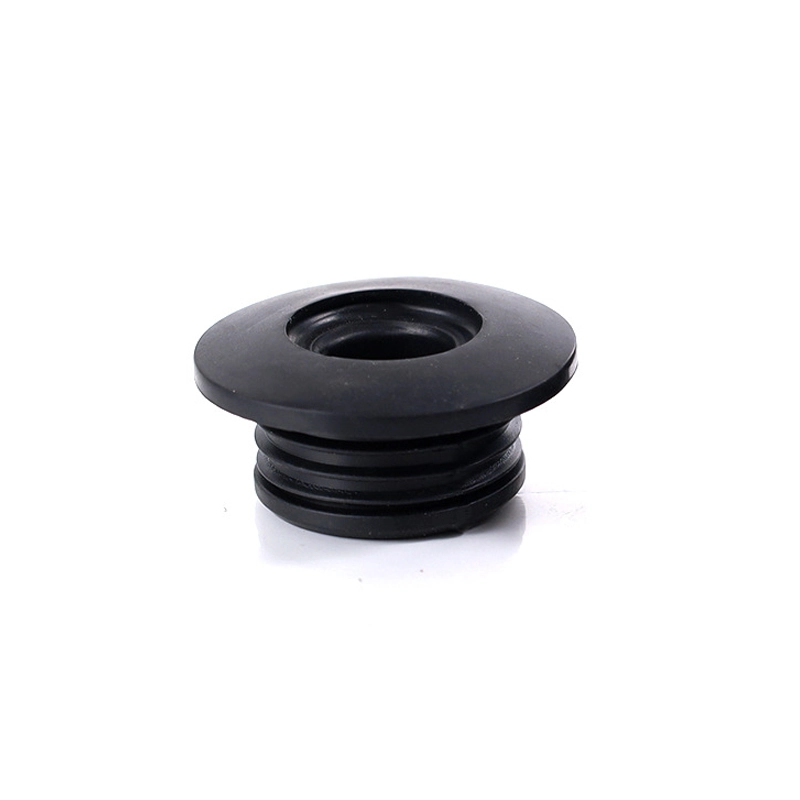
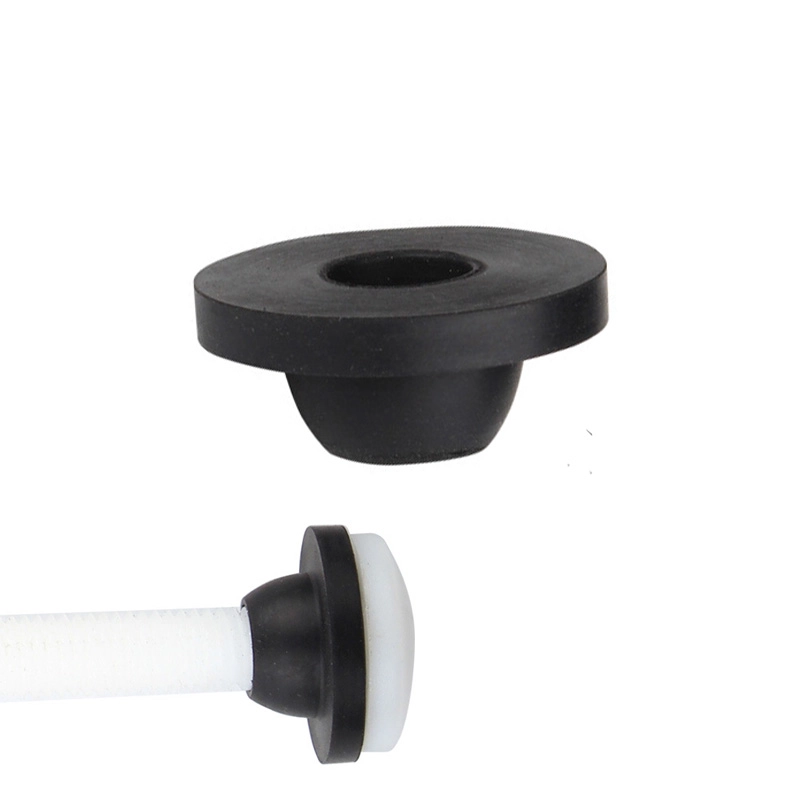
    • Gently pull the flush valve upward, then remove the black rubber seal from the bottom of the valve (the part to be measured). If the seal is stuck, use a flathead screwdriver to pry it loose gently to avoid damage;

  3. Clean the Seal: Wipe off limescale and impurities from the seal surface with a damp cloth to ensure no foreign objects interfere with measurement (limescale thickness may cause dimensional errors).

II. Core Steps: Accurately Measure 3 Key Dimensions

1. Measure "Inner Diameter (ID)": Determines Fit on the Flush Valve Seal Platform

Definition: The diameter of the seal’s inner ring (i.e., the "maximum diameter" the seal can fit over, which must exactly match the diameter of the "seal platform" at the bottom of the flush valve);

Measurement Method:

  • With a vernier caliper: Insert the "inner measuring jaws" (two sharp jaws on the inner side) into the seal’s inner ring, gently fit them against the inner wall (ensure the jaws are perpendicular to the wall, not skewed), and read the value (e.g., 64mm);

  • With a ruler: Place the seal flat, align one end of the ruler with the edge of the inner ring, and pull the other end to the opposite inner ring edge (ensure the ruler passes through the center. Rotate the seal and measure 2 more times, then take the average to avoid errors caused by seal deformation);

Key Reminder: The inner diameter tolerance must be ≤1mm. Otherwise, the seal will either "not fit" (too small inner diameter) or "loosen and leak after installation" (too large inner diameter).

2. Measure "Outer Diameter (OD)": Determines Coverage of Installation Hole to Prevent Leakage

Definition: The diameter of the seal’s outer ring (must cover the "flush valve installation hole" at the bottom of the tank to prevent water leakage from gaps);

Measurement Method:

  • With a vernier caliper: Use the "outer measuring jaws" (two flat jaws on the outer side) to fit tightly against the seal’s outer wall (no gaps), and read the value (e.g., 75mm);

  • With a ruler: Place the seal flat, align one end of the ruler with the edge of the outer ring, and pull the other end to the opposite outer ring edge (measure 2 more times and take the average);

Key Reminder: The outer diameter should be 5-10mm larger than the diameter of the tank’s installation hole (e.g., if the installation hole diameter is 65mm, the seal’s outer diameter should be 70-75mm). If the outer diameter is too small, it cannot cover the installation hole, leading to water leakage.

3. Measure "Thickness (T)": Determines Whether Sealing Pressure Is Sufficient

Definition: The vertical thickness of the seal’s side (must fill the gap between the flush valve and the tank; too thin results in poor sealing, while too thick lifts the flush valve);

Measurement Method:

  • With a vernier caliper: Place the seal flat, use the caliper’s "depth rod" (or flat jaws to clamp the seal’s side vertically), and read the vertical distance (e.g., 2mm);

  • With a ruler: Stand the seal upright, press its side tightly against the ruler, and read the distance between the top and bottom edges (ensure the ruler is vertical to avoid overestimation due to tilting);

Key Reminder: The thickness tolerance must be ≤0.5mm. If the original seal has a "lip" (1-2mm protrusion on the edge), measure the "lip thickness" (height of the protrusion) simultaneously. The new seal must have the same lip structure as the old one (otherwise, it cannot fit into the sealing groove).

III. Supplementary Confirmation: Record "Structural Characteristics" (Avoid Mismatched Structure Despite Correct Dimensions)

Size matching alone is not enough. Synchronously record the seal’s structural details to avoid "correct size but unable to install":

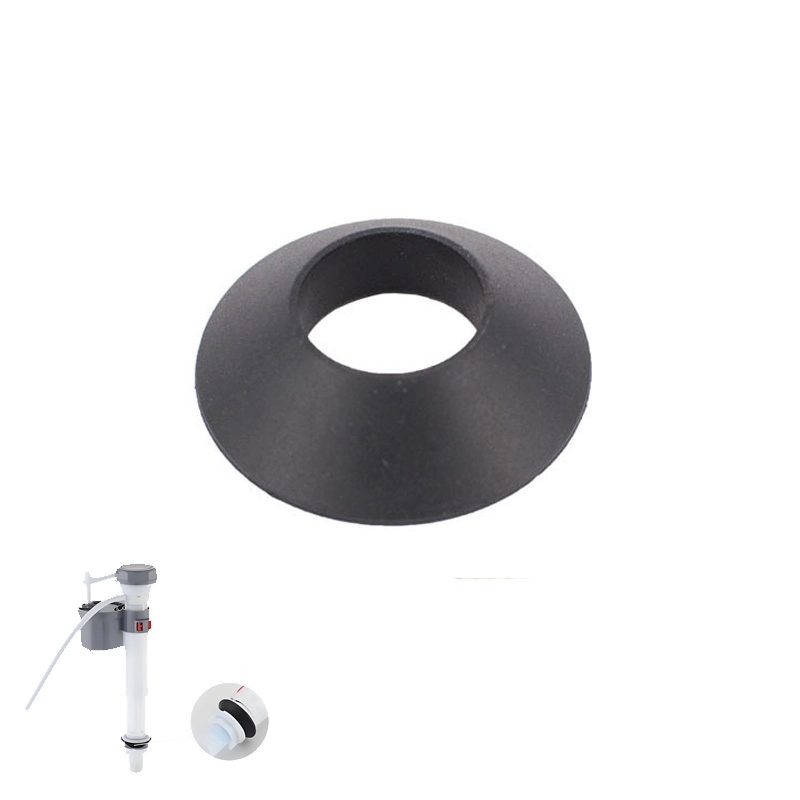
  • Shape: Is it a "round flat gasket" (most universal, no protrusions), a "lip-style ring gasket" (1-2mm protrusion on the edge, suitable for flush valves with sealing grooves), or a "special-shaped gasket" (e.g., D-shaped, with clips, brand-specific)?

  • Sealing Groove Compatibility: Check if the old seal has a "groove" (for clamping onto the flush valve’s seal platform). If yes, measure the "width of the groove" (use a caliper to measure the thickness at the groove), and the new seal must have the same groove size;

  • Take Photos for Reference: After measurement, take photos of the seal’s "front, side, and structural details" (especially the lip and groove) with a smartphone. Share them with the merchant when purchasing to avoid structural mismatches caused by only providing dimensions.

IV. Common Mistakes & Pitfall Avoidance Tips

  • Mistake 1: Measuring Only One Side, Ignoring Deformation
                   Old seals may deform due to long-term pressure (e.g., thicker on one side, thinner on the other). Measure the inner diameter, outer diameter, and thickness at 3 different positions (120° apart) on the seal, then take the average (e.g., 3 inner diameter measurements: 64mm, 64.1mm, 63.9mm → final value: 64mm).

  • Mistake 2: Confusing "Seal Dimensions" with "Installation Hole Dimensions"
                   The installation hole dimension (diameter of the hole at the bottom of the tank) ≠ seal outer diameter. Measure the installation hole separately (use a ruler to measure the hole diameter from the inside of the tank), then ensure the seal’s outer diameter is 5-10mm larger than the installation hole (mentioned earlier).

  • Mistake 3: Using a "Soft Tape Measure" for Circular Measurement (Causes Errors)
                   Soft tape measures are prone to overestimation due to stretching or poor fit when measuring circles. Prioritize rigid tools (vernier caliper, steel ruler). If only a soft tape measure is available, wrap it around the seal’s outer ring to measure the "circumference", then calculate the outer diameter using the formula: Outer Diameter = Circumference ÷ 3.14 (e.g., circumference 235.5mm → outer diameter = 235.5 ÷ 3.14 = 75mm).

V. Emergency Plan: How to Measure Without an Old Seal?

If the old seal is lost or damaged, directly measure the sealing structure of the flush valve body as a substitute for the seal dimensions:

  • Inner Diameter (Substitute): Measure the diameter of the "seal platform" at the bottom of the flush valve (the cylindrical diameter the seal needs to fit over) → this diameter = seal inner diameter;

  • Outer Diameter (Substitute): Measure the diameter of the "flush valve installation hole" at the bottom of the tank → seal outer diameter = installation hole diameter + 5-10mm;

  • Thickness (Substitute): Measure the "height" of the flush valve’s seal platform (the height the platform protrudes from the valve bottom) → this height = seal thickness (must fully fill the gap).

With the above steps, you can ensure the measurement error is ≤1mm, meeting the compatibility requirements of over 99% of flush valve seals. If you are still unsure about the model after measurement, provide the "3 dimensions + structural photos" to the merchant, or share the toilet brand and model for further confirmation of compatible specifications.


Related Product
Read More >>
Rubber Sealing Ring for Squat Toilet Inlet Pipe Rubber Sealing Ring for Squat Toilet Inlet Pipe
The OEM Custom Rubber Sealing Ring for Squat Toilet Inlet Pi...
Urinal Drain Seal Gasket Urinal Drain Seal Gasket
Our custom urinal drain seal rings are designed for dependab...
Hidden Water Tank To Toilet Inlet Pipe Rubber Seal Ring Hidden Water Tank To Toilet Inlet Pipe Rubber Seal Ring
Our custom hidden water tank to toilet inlet pipe rubber sea...
Toilet Flush Valve Rubber Seal Washer Toilet Flush Valve Rubber Seal Washer
Our custom toilet tank flush valve rubber seal washers are d...

Request a Quote

Complete the short form below and a ZXLSEAL sales representative will be in touch.